
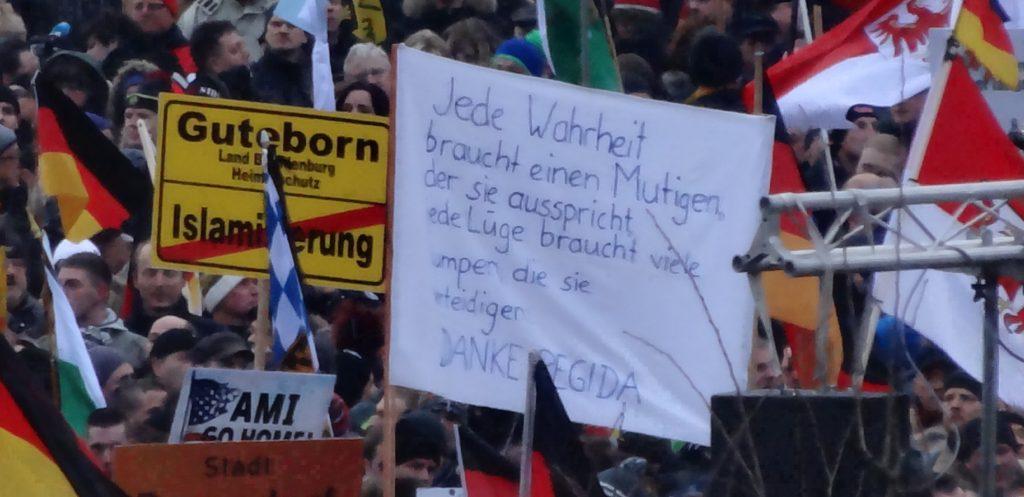
Just as, in the past, the political antisemitic movement rallied against “Judaization,” the struggle against “Islamization” has become the primary objective of contemporary Islamophobic political movements
This text is based on the pre‑print version of Bravo López, Fernando, En casa ajena: bases intelectuales del antisemitismo y la islamofobia (Barcelona: Ed. Bellaterra, 2012). It is a selection from chapters 1 and 2 of the first part and chapter 3 of the second part. The translation into English was provided by Microsoft Copilot and revised by the author.
Counterrevolutionaries and Revolutionaries in the Face of Jewish Emancipation and “Reform”
The counterrevolution did not simply inherit the positions of anti‑Jewish polemicists from before the eighteenth century. Although its points of departure and objectives remained similar—a confessional foundation that, in principle, aimed at the conversion of the Jews—it was also influenced by secularized language and Enlightenment ideas. Thus, conversion came to be viewed not only as the path to salvation for the Jews or as a means of preserving the integrity of the Christian faith, but also as the sole avenue for inclusion within the nation. Conversion became a prerequisite for incorporating Jews as citizens and, ultimately, for safeguarding the well‑being of the nation. As Louis de Bonald (1754–1840) wrote in a text from February 1806:
“Those who voluntarily close their eyes to the light so as not to see anything supernatural in the destiny of the Jews attribute the vices imputed to them solely to the oppression they suffer; consequently, they want emancipation to precede the reform of those vices. Those who, on the contrary, believe that the cause of the degradation of the Jewish people and of its hostility toward all other peoples lies in its religion—now antisocial—and who hold that their misfortunes, as well as their vices, are the punishment for a great crime and the fulfillment of a terrible anathema, argue that the correction of those vices must precede any change in their political condition. In other words, to speak plainly: the Jews cannot be—and, whatever may be done, will never be—citizens under Christianity without becoming Christians.”[1]
From the counterrevolution onward, for confessional conservatism throughout Europe, Christianity—regardless of denomination and nation—ceased to be merely a religious faith, the sole path to salvation. It became an essential component of national identity. Consequently, Jews, who did not share this essential element of national identity, were, as long as they remained Jews, foreigners within a “Christian state.” Thus, for certain authors, the “reform” of the Jews meant their conversion. Any other form of distancing from Jewish precepts—any alternative form of “reform”—was regarded with suspicion, if not outright hostility. For some, for instance, a Jew who abandoned religious observance and became a free‑thinker would remain anti‑Christian and therefore just as dangerous as the “orthodox” Jew. So, both revolutionary and counterrevolutionary thinkers demanded reform from the Jews, but in very different senses.
Other authors, however—also from among the ranks of both revolutionaries and counterrevolutionaries—expressed skepticism regarding the possibility that Jews could carry out the demanded change. They believed that the only place the State could grant them was a subordinate one: a tolerated but subjugated minority—in other words, their traditional place within the ghetto. Ultimately, among authors who maintained a negative view of the Jews, the boundary between revolutionary and counterrevolutionary approaches to Jewish incorporation into the nation often became blurred.
Nevertheless, despite these similarities—which would gradually give rise to two variants within antisemitism, one revolutionary and the other counterrevolutionary—the differences between them were significant. Each identified Judaism with different things. While many authors in the revolutionary tradition continued to perpetuate the same contemptuous image of Jews held by Enlightenment figures such as Voltaire, the counterrevolution constructed a somewhat different image. Jews remained the embodiment of everything deemed undesirable, but what counted as undesirable shifted. Whereas Enlightenment thinkers reproached the Jews for their fanaticism, intolerance, and irrationality, the counterrevolution identified them with the Enlightenment itself: rationalism, criticism of established religion, liberalism, and revolution. Thus, Jews came to represent one thing or its opposite depending on the author’s ideological stance—but always, in every case, whatever the author most detested.
Still, on one point they agreed: granting citizenship to Jews without prior reform would endanger Christian citizenship and jeopardize the State itself. Without such reform, Jews would continue to exhibit antisocial behavior and harbor global domination aspirations. As Bonald warned, using “their wealth to acquire great influence in popular elections,” they would ultimately subjugate Christians, dominate them, and reduce them to slavery.[2] This marked the spread of a new idea among opponents of emancipation: the notion of “Judaization,” the belief that Jews were infiltrating Christian society, disseminating harmful ideas, seizing control of everything, and subjecting Christians to their power.
The Judaization of Europe and the Judeo‑Masonic Conspiracy
According to the antisemites, legally recognizing the equality of the Jews meant dismantling the barriers that had protected Christians from Jewish wickedness; it placed in Jewish hands an unparalleled weapon with which to carry out their anti‑Christian designs. Nothing would hold them back now. They would use that equality to gradually impose themselves in every sphere of society— which would, inevitably, become Judaized. Jews, who would never cease to be strangers to the nation and would always constitute a State within the State,[3] would slowly infiltrate their influence into the rest of society, eliminating the separation between the two States in order to impose their own, to create a Jewish State. And since they were also part of a cosmopolitan nation spread across all corners of the earth, acting everywhere in a concerted and coordinated fashion, they would soon ensure that this Jewish State dominated the entire planet. At last, the Jews would rule the world, fulfilling their own prophecies.
Such a calamity was obviously unacceptable to Christians, and if some Christians defended Jewish equality it could only be—so the argument went—because they had already been dominated by the Jews through a system of secret societies, or because they themselves were Jews in disguise, or Christian Judaizers. The ideas that had led to the legal emancipation of the Jews had to be, therefore, of Jewish origin. Eighteenth‑century philosophy, the Enlightenment, and revolutionary ideas were all Jewish, and therefore anti‑Christian. Christians imbued with these ideas had become anti‑Christian, and, conspiring with the Jews, secretly plotted to destroy Christian civilization and impose Jewish domination. Equality was merely the first step.
Such, more or less, was the development of the antisemitic argument that most effectively legitimated the reaction against Jewish emancipation.[4] It was this argument that gave shape to the antisemitic movement, that gave it meaning and purpose: to inform the public of the danger looming over them and thus encourage a reaction capable of halting Judaization. This argument also resurfaced whenever Jews gained legal improvements that brought them closer to equality, and in vastly different historical contexts—from Spain’s era of Limpieza de Sangre, when the Letter of the Jews of Constantinople was fabricated to justify the statutes of purity of blood, to the Holocaust and even beyond.
Throughout this long history, despite substantial differences in historical context, there were always those who—successfully or not—sought to justify Jewish inequality by appealing to the idea that Jewish equality would mean Jewish domination and the Judaization of Christian society, and that there existed a conspiracy, a hidden plan for which, conveniently, “proof” could be produced: whether the aforementioned Letter, the testimonies of supposedly confessional Jews who had confided in Christian friends, or The Protocols of the Elders of Zion.
In any case, the idea that Jews sought to impose themselves, to dominate the world, to destroy Christianity by Judaizing Christian society, rested on a prior assumption: that Jews were irreconcilable enemies of Christians; that it was their duty as Jews to eradicate Christianity; that this was what their religion taught them, as demonstrated by their Scriptures, especially the Talmud. Thus, long before The Protocols of the Elders of Zion became popular, there already existed a well‑developed argument centered on the existence of a conspiracy that had enabled the spread of “Jewish ideas”—the ideas that led to emancipation and were fostering the expansion of Jewish domination, the Judaization of Christian society.
As we will see later, the idea that emancipation opened the way to a Jewish‑dominated system, to the Judaization of European societies, was common to all forms of antisemitism, including so‑called “revolutionary antisemitism.”[5] Nevertheless, it seems that at first this latter strand was not particularly prone to conspiracy theories. These were far more common in counterrevolutionary circles, which, following the work of Augustin Barruel (1741–1820), attributed the success of the French Revolution to the machinations of secret societies, especially Freemasonry. Jews were soon added to the equation as the inspirers and controllers of those societies. It was a mysterious figure named Jean‑Baptiste Simonini who, in 1806, warned Barruel by letter that in his theory about the causes of the Revolution was missing a crucial actor: the Jews.
“Sir, a few months ago I had the good fortune, by chance, to come across your excellent work entitled Memoirs Illustrating the History of Jacobinism. I read it—or rather devoured it—with incredible pleasure (…) Oh, how well you have unmasked those infernal sects that prepare the coming of the Antichrist and are the implacable enemies not only of the Christian religion but of every form of worship, of all society, of all order! There is, however, one sect that you have treated only lightly. Perhaps you did so on purpose, since it is the most well‑known and therefore the least feared. But I believe it is today the most formidable power, considering its immense wealth and the protection it enjoys in almost every State of Europe. You surely know, sir, that I speak of the Jewish sect. On the surface, it appears separate from the others, but it is not. Indeed, as soon as any one of those sects becomes an enemy of the Christian name, the Jews support it, encourage it, and protect it. Have we not seen—and do we not still see—them lavish their gold and silver to support and guide the modern sophists, the Freemasons, the Jacobins, the Illuminati? The Jews, therefore, together with the other sectarians, form a single faction whose aim is, if possible, to annihilate the Christian name.”[6]
Simonini told Barruel that this was no mere theory but a fact confirmed by several Jews he personally knew. From that moment on, among counterrevolutionary antisemites, the idea gained ground that Judaization was underway and that it originated in the influence and control Jews exerted over the secret societies behind the Revolution—precisely the Revolution that had brought about Jewish emancipation and its resulting Judaization. Antisemitism thus came to dominate much of the counterrevolution, especially Catholic integralism. In the second half of the nineteenth century, Catholic publishing houses tirelessly printed works expounding these theories, and Catholic journals such as La Civiltà Cattolica, distributed in many countries, made them available to countless Catholic writers who repeated them incessantly. Among such works, one of the most influential was Roger Gougenot des Mousseaux’s The Jew, Judaism, and the Judaization of Christian Peoples.[7]
The “Reform” of Islam and the Threat of “Islamization”
In Islamophobia, the argument unfolds as follows: Islam is incompatible with the West. The values it upholds stand in opposition to those defended by Western societies. This incompatibility prevents Muslims from integrating in Western societies, and granting them citizenship despite such an obvious incompatibility constitutes a grave danger. Once they obtain citizenship, Muslims will use their newly acquired rights to assert themselves, take power, and subject their fellow citizens to Islamic law. They will ultimately Islamize Western societies. But what happens if Islam changes? What if it abandons what makes it incompatible and becomes “Westernized”? What if Islam undergoes reform? Is such a reform even possible?
The idea that Islam—as it currently exists—is a problem, and therefore must be “reformed,” is a notion that has been widely circulated in recent years, particularly within European debates surrounding the presence of Muslims on the continent. According to this view, Islam is incompatible with what is considered “democratic” and “Western.” Thus, as long as Islam does not change—as long as it is not reformed—it will remain incompatible with the West, with democracy, and therefore, from an essentialist point of view, the integration of Muslim immigrants in Europe will be impossible. Reform is therefore deemed necessary. At times, this reform is linked to the Enlightenment, as some argue that Islam is incompatible with democracy because it never experienced anything similar to the Enlightenment.[8]
“There are 20 million Muslims in Europe, and it will be very interesting to see in the coming years how they practice their religion in our liberal democracies. Will it evolve differently? Will the great reform of Islam—one that some long for—emerge in Europe?”, asked Dutch journalist and sociologist Paul Scheffer.[9] “Can Islam be reformed through its own sacred text, the Qur’an? Or is the only way to advance Islamic societies to establish a new balance between religion and reason, rejecting religion as a measure of morality?”, wondered journalist Soledad Gallego‑Díaz.[10] “Islam needs a reform that makes Islamist fanaticism impossible,” stated Member of the European Parliament Emilio Menéndez del Valle.[11] And Salman Rushdie argued that “What is needed is a move beyond tradition — nothing less than a reform movement to bring the core concepts of Islam into the modern age, a Muslim Reformation to combat not only the jihadi ideologues but also the dusty, stifling seminaries of the traditionalists, throwing open the windows of the closed communities to let in much-needed fresh air.”[12]
To argue that Islam—treated as if it were a monolithic entity—needs “reform” is not inherently Islamophobic. It is, in fact, an essentialist position that can also be found within Islamic movements themselves—for example, in various strands of Islamic reformism.[13] This position becomes Islamophobic only when the supposed necessity of reform is derived from the claim that Islam, as it exists, constitutes a threat. In such cases, even when the possibility of reform is acknowledged, it is understood as nearly impossible, since Islam, in order to be reformed, would have to cease being Islam—that is, it would have to abandon core dogmas such as the belief that the Qur’an, in its entirety, contains the literal word of God, and that Muhammad is a perfect model to emulate. It is symptomatic of this mindset that former Muslims—those who have left the faith entirely—are often presented as examples of “reformed,” “liberal,” or “moderate” Muslims. This illustrates once again how Muslim identity is shifted from being defined by faith to being defined by ethnocultural origins or ancestry. Likewise, Muslims who do not conform to the stereotype of the radical Islamist are dismissed as not being “real” Muslims.
For example, according to Oriana Fallaci, a good Muslim cannot be “moderate.” She argued that the Qur’an “is not a book to be interpreted according to circumstances or one’s convenience. The Qur’an is what it is. And the fundamentalists are not its degenerate face. Ergo, a good Muslim cannot be moderate. He cannot accept the rule of law, freedom, democracy, our constitution, our laws. Moderate Islam does not exist.”[14] Yet, in the same text, Fallaci conceded that although moderate Islam does not exist, “moderate Muslims” do—but that they are an exiguous minority who cannot be considered true Muslims, since “among us they eat ham, drink wine, listen to music, respect women, rarely go or never go to the mosque, often do not observe Ramadan. In short, they change. They become Muslims who are no longer Muslims, discovering that Ernest Renan was right when he said that Islam is the kingdom of absolute dogma.”[15] Thus, Islam cannot be reformed, and the “reformed Muslim” is simply the one who ceases to be Muslim.
Similarly, Spanish intellectual Jon Juaristi argued that “a moderate Muslim would be a living contradiction,” and that the closest a Muslim could come to moderation would be to refrain from terrorism while still wishing to Islamize the world “through the instrumental use of democracy combined with the accelerated demographic growth of the umma.” In this view, every Muslim desires to Islamize the world—almost by nature—so that anyone who claims to be Muslim but does not hold such aspirations is, by definition, not a Muslim: “a moderate Muslim is not a Muslim.”[16] In fact, from this perspective, true Muslims—unlike the supposed moderates who are not really Muslims—are fundamentally different from “us” in every respect, so antithetical, that they do not love their children as “we” do, with true affection. Their love, Juaristi claims, is “compatible with the pedagogy of total submission and abuse,” a love that does not prevent them from strapping their children with explosives and sending them to their deaths.[17] One must infer that any Muslim who refuses to see his children murdered, mistreated, or placed under a regime of strict submission is therefore not a “true” Muslim. Thus, within this worldview, there is scarcely any room left for being Muslim without simultaneously being a ruthless being willing to do anything to Islamize the world. Reform, then, is impossible; the only path is de‑Islamization.
In reality, although this is often forgotten, the debate surrounding the integration of Muslim populations—and the supposed need for a reform within Islam to make such integration possible—points to a broader discussion about the place that religion should occupy in a secular and democratic state. All religions, in one way or another, aspire for the norms governing the state to be inspired by, or at least not contradict, the moral principles they promote. The fact that the debate is so heavily centered on Islam is therefore striking, especially considering that in most of Europe Christian churches wield far greater social and political power than any Islamic community could possess. However, the recent rise in concern over Islam—concern which at times becomes Islamophobia—has narrowed the debate so that the question of reform pertains almost exclusively to Islam. Moreover, because Islam is perceived as a “foreign” religion—given that most of its believers residing in Europe are individuals with personal or family histories of immigration—the notion has emerged that, in order to be European or Western, Islam must change—it must integrate so as to adapt to “our ways.” Much of the debate about the existence of an Islam in Europe, a European Islam, or an “Euro‑Islam,”[18] is grounded, to a significant extent, in the idea that Islam is something foreign, alien, and to some degree antithetical to Europe.
By contrast, the various Christian denominations are perceived as “ours,” and therefore, even though they may occasionally enter into conflict with the state, they never cease to be understood as part of “our” heritage. They are not expected to change or “reform” in order to belong to “our community”; they are already part of it by definition. Judaism, as we know, endured unspeakable suffering before it came to be recognized as part of Europe; and even then, some claim it had to undergo a prior reform to do so—the Haskalah[19]—, conveniently forgetting that many Jewish communities rejected the Haskalah, and that does not make them less European.
In some cases, within certain secular milieus, it is assumed that these Christian churches already carried out their own “reform”—for example, the Vatican II in the Catholic case[20]—to adapt to life in a secular and democratic state after long and bitter struggles against liberalism throughout much of the nineteenth and part of the twentieth century. Yet even in the moments of greatest confrontation between secular sectors of society and the most conservative factions of, say, the Catholic Church, the former, while calling for the Church to “modernize,” did not question its European character.
Similarly, evangelical churches are almost never pressed to undergo reform in order to be considered “European,” as they are presumed to be such by definition, regardless of how fundamentalist they might be. This is not the case with Islam: Muslims, in order to be regarded as European or Western, must first reform. It is presented as a prerequisite. Ultimately, this represents nothing more than a modern revival of the nineteenth‑century debate linking Jewish emancipation to the supposed need for Jewish reform—but now, the protagonists are different: Muslims.
Islamization and the Myth of the Islamist–Leftist Conspiracy
According to Islamophobes, if reform and modernization of Islam are impossible—if the only conceivable “reform” is the disappearance of Islam as a religion—then the incompatibility between Islam and the West will persist for as long as Islam exists, or until the West collapses. From this premise follows an inevitable conflict, one that has supposedly pitted Islam and the West against each other for centuries, and that now reproduces itself within the West due to the growing presence of Muslims. Their presence means that the enemy not only threatens “us” from the outside but is now among “us”, gradually invading “us”, and, like a fifth column, seeks to destroy “our” identity, culture, and values—to Islamize the West and, later, the entire world.
The danger represented by the growing Islamic presence in the West—given the alleged essential incompatibility between what the West represents and what Islam is, teaches, defends, and aspires to—is magnified by the West’s own attitude toward that presence. Instead of treating the enemy as such, Western societies treat him as a friend.[21] He is granted rights, provided with protection, education, healthcare; he is allowed to freely practice his religion, to build mosques, to flaunt supposedly aberrant religious symbols such as the veil or the burqa, and increasingly, he is even granted citizenship. In this way, the enemy steadily gains ground. Moreover, thanks to his incredible fertility, he reproduces at an alarming rate. Soon he will be the majority and, armed with citizenship, he will elect governments, impose his norms, Islamize the West, and reduce the rest of “us” to the status of dhimmis.
Such a dire future cannot possibly be acceptable to any “true” Westerner, and if anyone supports recognizing the rights of Muslims, granting them citizenship, or respecting Islam as a legitimate religious option, it is because—so the argument goes—they secretly hate the West. This hatred drives them to ally themselves with its enemies. It leads them to embrace multiculturalism, which is presented not as a doctrine of coexistence but as a strategy to corrode Western societies from within. Multiculturalism and cultural relativism prevent Europeans from knowing who they are and from being proud of their culture and identity; and this, in turn, prevents them from defending themselves against external threats. A person who believes all cultures are equally valid, who does not acknowledge the intrinsic superiority of the West—how could such a person defend it? Indeed, to deny that superiority is taken as proof of hatred, and this hatred is what drives one to seek the destruction of the West and to ally with the enemy, facilitating his penetration, enabling his growing influence and power over “us”. In fact, there exists—so they claim—a vast conspiracy between the anti‑Western forces of the left and Islam to bring about the downfall of the West, of everything Western civilization represents.
This is, roughly, the argument that contemporary Islamophobia deploys, mirroring that of nineteenth‑ and early twentieth‑century antisemitism. The issue is no longer the Judaization of Europe, the conspiracy to Judaize the world; it is the Islamization of Europe, of the West, of the entire world, and the alleged existence of a genuine conspiracy to accomplish it. This theme is central to current Islamophobic discourse, and just as the political antisemitic movement once organized itself around the fight against Judaization, Islamophobic political movements today have oriented themselves around the fight against Islamization.
As in the case of Judaization, the idea of Islamization springs from a profound cultural pessimism: an obsession with decline, with the degeneration of the culture, civilization, or nation with which the Islamophobe identifies. In this view, Islamization results, of course, from the threat posed by Islam, but such a threat would not be nearly as severe if “our” community had not decayed. Islam would still be dangerous—still the vital threat it supposedly is—but at least “we” would be able to confront it, accept the conflict, fight, and win. Yet because “we” are depicted as a society in decline—with no values, no identity, no pride—Islam can defeat “us” easily and inevitably. Thus, for example, Rafael Bardají, director of international policy at the FAES Foundation, stated: “Europe is suffering from such a severe identity crisis, the product of multiculturalist policies, that it risks being laid prostrate at the feet of those groups whose markers of identity remain important and very strong. In this sense, the challenge posed by Islamic communities in Europe must be taken very seriously.”[22]
Furthermore, as in antisemitism, the Islamophobia obsessed with Islamization rests on an essentialist conception not only of Islam but also of the community with which the Islamophobe identifies. The cultural, national, or civilizational community is portrayed as monolithic, endowed with a set of essential characteristics that have remained unchanged throughout history precisely because they are part of its essence. Thus, the supposedly malignant traits of Islam are contrasted with the benevolent traits of “our” community. If Islam is servitude, obscurantism, fanaticism, violence, and intolerance, then the West, Europe, Christianity, Spain—or simply “we”—represent the opposite: freedom, tolerance, rationalism, in short, the Good. Since these traits are essential, they have belonged to Islam or to “our” community since their inception; and from this derives the idea of a timeless conflict between them, because they are eternal opposites, antagonists by nature.
The essentialist conception of the cultural or national community also leads to viewing it as homogeneous. Its essential characteristics are shared by all its members; otherwise, those individuals are seen with suspicion, as foreign intruders, as outsiders, even as traitors. Difference endangers the integrity of a community conceived in such terms; it is therefore viewed with apprehension, if not outright rejected or persecuted. The coexistence of different ethnocultural groups implies a danger, for the mere presence of alternative ways of life calls into question the idealized image of the community, undermining its supposedly essential traits. As Freud noted, it is “as though the occurrence of any divergence from his own particular lines of development involved a criticism of them and a demand for their alteration.”[23]
From this arises the widespread idea—among both antisemites and Islamophobes—that contact between different cultures, nations, or civilizations can only result in the victory of one over the other. The German antisemitic leader of the late nineteenth century, Wilhelm Marr, argued that when one people conquers another, only two outcomes are possible: either the conqueror dominates and eliminates the conquered, or the conqueror disappears, absorbed by the other.[24] Coexistence was inconceivable. Similarly, Italian political scientist Giovanni Sartori claimed that “in Europe, if the identity of the guests remains intact, then the identity to be saved will—or will become—that of the hosts.”[25] From a Catholic perspective, Cardinal Giacomo Biffi reached similar conclusions: coexistence with Europe’s Muslims entailed the danger of Islamization. Indeed, according to him, that was precisely what Muslims hoped for, since they supposedly wished to remain different in what was essential:
“Muslims—in most cases, and with few exceptions—come here determined to remain foreign to our type of ‘humanity,’ both individual and social, in what is essential, in what is most precious; foreign to that which we cannot renounce in secular terms. More or less openly, they come here determined to remain substantially ‘different,’ expecting us to become substantially like them. (…) Europe will once again be Christian or will become Muslim.”[26]
Therefore, according to this point of view, the existence of ethnocultural minorities within nation-states becomes a problem. They must disappear, absorbed by the majority. Recognizing their rights as a minority so that they may preserve their cultural heritage endangers the cultural identity of the majority, which will gradually fade away. It will succumb; it will become Judaized or Islamized. If “they” do not want to renounce their identity, if they do not want to give up their customs or their religion, then they will impose them upon “us”. In fact, merely by wanting to preserve them, they are already imposing them on us. Even more so when the minority community in question identifies with a religion that instills in its believers the idea that they are superior to the rest of humankind and destined to dominate it, or that they are obligated to impose their religion upon the entire world: “it is true that ‘jihad’ does not generally mean ‘war’ but rather ‘effort,’ yet such effort (which also includes military efforts) is directed toward global Islamization and is, along with prayer and almsgiving, one of the three principal obligations of every believer,” Jon Juaristi asserted.[27]
From this perspective, avoiding Judaization or Islamization is a necessary and legitimate task, for the very survival of “our” culture, nation, and civilization depends on it. To that end, the minority must inevitably be completely assimilated. And to achieve this, one must first eliminate what identifies it as a minority: its language, its distinctive clothing, its particular customs, its religion. If doing so requires violating the fundamental rights of the minority, then so be it, for it is—we are told—a matter of life and death. Moreover, if such steps are not taken, “they” would win, and then what “we” refuse to do to them, they would do to us. Were Judaization or Islamization finally to come about, they would subject us to a regime of servitude, strip us of our rights, and establish a system in which only Jews or Muslims would enjoy full rights.
As with Judaization, the idea of Islamization has two dimensions, which may appear together or separately in discourse. The first is what we might call “spiritual Islamization,” whereby Islam is believed to be imposing its values and its Law. For example, in September 2006, Robert Redeker wrote in Le Figaro that the prohibition of certain types of swimwear along the Seine was evidence of “Islamization of minds”:
“It is not unreasonable to think that this prohibition reflects an Islamization of minds in France, a more or less conscious submission to the dictates of Islam. Or at least that it is the result of insidious Muslim pressure on minds. Islamization of minds. (…) Islam is attempting to force Europe to submit to its vision of human beings.”[28]
The second dimension is “physical” or “biological” Islamization, through which Islam is believed to be imposing itself via demography. In the Islamophobic imagination, the second inevitably implies the first: demographic dominance is merely the prelude to the imposition of Islamic law. Yet in discourse they need not always appear together. This conception of Islamization often seeks legitimacy through population statistics and future projections. Today, for example, Muslims are said to number 15 million; at current rates of growth, in 25 years they will be 50 million; in 50 years they will be the majority; they will seize power; impose Islam; Islamization will be complete. This is the idea. By the end of the twenty‑first century, Europe will be Muslim. “Europeans marry late,” Bernard Lewis claimed, “and have no children or very few. Meanwhile, there is substantial immigration: Turks in Germany, Arabs in France, Pakistanis in England. They marry young and have many children. Following current trends, there will be Muslim majorities in the European population by the end of the twenty‑first century at the latest.”[29]
Numbers—always numbers—are invoked, though they vary wildly from one author to another. And they are all based on a false premise: that reliable official statistics on Muslim populations exist. Such statistics do not exist, at least not in Europe, where asking citizens about their religious beliefs is often prohibited by law. Estimates are therefore based on the national origins of foreign residents. But this leads to an ethnification—or racialization—of Muslim identity, whereby being Muslim is no longer defined by personal belief but by ethnic or national origin. Muslim identity even comes to be understood through the lens of biological determinism: “ten percent of all children born each year in the European Union will be slaves of Islam for the rest of their lives,” claimed a columnist for the Spanish neoconservative website LibertadDigital.es.[30] The evil represented by Islam is thus said to be transmitted through blood, from parents to children, generation after generation.
These ideas were already espoused by Bosnian Serb general Ratko Mladić, convicted in 2017 of genocide and crimes against humanity by the International Criminal Tribunal. In an interview, Mladić stated:
“Serb mothers watched their children taken away by the Musulmani to become sultan’s kids to be sold as slaves (…). The Islamic world does not have the atomic bomb, but it does have a demographic bomb. Atomic bombs are under some kind of control. Their enormous reproduction is not under any kind of control. (…) Very swiftly one man with five or six wives creates a village. Then they build a mosque and there you have it! Gorazde is not Istanbul, not Izmir, not Ankara. The Muslims who live there are not of that soil. They were not raised there.”[31]
In this worldview, combating the evil represented by Islam does not mean educating new generations in different values; it means ensuring that there are fewer Muslims—by expelling them or killing them, as Mladić did—making them reproduce less, or making “true Europeans” reproduce more. Apparently, being European, or sharing democratic values, also depends on blood. Indeed, in Islamophobia, concerns about Muslim demographic growth most easily slide into racist ideas, since they rest on the assumption that religious beliefs, moral codes, and behavioral traits are transmitted biologically, inherited through lineage. Inferring extremely negative cultural characteristics from biological origins is the foundation of racism. One of the most notable examples of such thinking is the “Muslim demographics” video that has circulated widely online in recent years.[32]
At first, the idea of Islamization functioned as an alarm bell warning of a future danger—something that could happen if the proper measures were not taken, or that would happen if the wrong ones were enacted. Giovanni Sartori’s claim that, if Muslims were granted citizenship, they would impose their norms and take power, pointed precisely to this idea: granting equality would enable Islamization. Therefore, inequality and discrimination had to be maintained indefinitely—which amounted to advocating a form of apartheid.
Over time, however, the idea grew stronger, and Islamization ceased to be a hypothetical future threat; it became, supposedly, a present reality. France was no longer the Jewish France denounced by Édouard Drumont; it was now a “Muslim France.” “A new Muslim France is growing and multiplying significantly in all sectors of social, political, administrative, religious, cultural, educational, sporting, even gastronomic life,” wrote Juan Pedro Quiñonero in ABC. “This fact forces the rest of traditional society to take a stand and anxiously debate the new place of Islam within the nation.”[33] Europe was no longer Europe; it had become a province of Islam—“Eurabia.”
The term Eurabia was first used by Swiss author Bat Ye’or in her book Eurabia: The Euro‑Arab Axis.[34] Later, the term and the conspiracy theory attached to it were adopted by Oriana Fallaci, who undoubtedly did the most to popularize it among Islamophobic groups. In her book, Ye’or asserted that there existed a conspiracy between Europe and the Arab world to destroy Israel. According to her, documents existed that proved the Euro‑Arab conspiracy. It was supposedly forged in the 1970s, during the oil crisis, when Arab states had coerced the European Economic Community into allowing more and more Arab immigrants into Europe. This demographic influx was accompanied by the promotion of Arab culture, which would encourage the adoption of Islam among the native population and foster sympathy for the Arab cause against Israel. Thus, European politicians had placed themselves at the service of Arab interests, and the Islamization of Europe had been accomplished. The conspiracy theory advanced by Ye’or bears an uncanny resemblance to The Protocols of the Elders of Zion, something that did not go unnoticed by some Israeli journalists.[35]
The idea that a real conspiracy exists to Islamize Europe, the West, and the world has spread rapidly among Islamophobic circles. Yet while Ye’or and Fallaci believed that virtually all European politicians, media, and academics were part of the conspiracy, most Islamophobes point in only one direction: the European left or American liberals. Just as antisemitism linked Judaism with the forces of revolution, Marxism, Bolshevism, and the left in general, Islamophobes link Islam with the ideological heirs of revolutionary leftism in Europe.
However, in antisemitism, the relationship between Judaism and the left was one of filiation: Freemasonry, the Enlightenment, the Revolution, and Bolshevism all supposedly originated in Judaism. In Islamophobia, the relationship is conceived not as filiation but as alliance. In either case, though, a communion of ideas and interests is presumed to exist, proving and explaining the connection. In the 1930s, La eterna cuestión judía—the Spanish‑language propagandistic publication of the Nazi regime—claimed that the link between Judaism and the left could be explained because “the promises and utopias of socialist theorists evoke in the Jews the memory of the prophecies of the people of Israel, which announce Jewish dominion over the earth.”[36] For early‑twenty‑first‑century Islamophobia, the left’s ally is no longer Judaism but Islam. One conspiracy theory has replaced the other, but the image remains the same—and the objective attributed to it, the destruction of Western society, remains unchanged. It is the same hatred and the same nonsense.
Further reading:
- Allen, Christopher. «Opposing Islamification or Promoting Islamophobia? Understanding the English Defence League». Patterns of Prejudice 45, n.o 4 (2011): 279-94, https://doi.org/10.1080/0031322X.2011.585014.
- Bangstad, Sindre. «Eurabia comes to Norway». Islam and Christian-Muslim Relations 24, n.o 3 (2013): 369-91, https://doi.org/10.1080/09596410.2013.783969.
- Bracke, Sarah, y Luis M. Hernández Aguilar, eds. The Politics of Replacement: Demographic Fears, Conspiracy Theories, and Race Wars. London: Routledge, 2023.
- Davis, Mark. «Violence as Method: The “White Replacement”, “White Genocide”, and “Eurabia” Conspiracy Theories and the Biopolitics of Networked Violence». Ethnic and Racial Studies 48, n.o 3 (2025): 426-46, https://doi.org/10.1080/01419870.2024.2304640.
- Fekete, Liz. «The Muslim Conspiracy Theory and the Oslo Massacre». Race & Class 53, n.o 3 (2012): 30-47, https://doi.org/10.1177/0306396811425984.
- Hafez, Farid. «From “Jewification” to “Islamization”: Anti-Semitism and Islamophobia in Austrian Politics Then and Now». ReOrient 4, n.o 2 (2019): 197-220, https://doi.org/10.13169/reorient.4.2.0197.
- Larsson, Göran. «The Fear of Small Numbers: Eurabia Literature and Censuses on Religious Belonging». Journal of Muslims in Europe 1, n.o 2 (2012): 142-65, https://doi.org/10.1163/22117954-12341237.
- Liogier, Raphaël. Le mythe de l’islamisation: essai sur une obsession collective. París: Seuil, 2012.
- Pilbeam, Bruce. «Eurabian Nightmares: American Conservative Discourses and the Islamisation of Europe». Journal of Transatlantic Studies 9, n.o 2 (2011): 151-71, https://doi.org/10.1080/14794012.2011.568166.
- Zia-Ebrahimi, Reza. Antisémitisme et islamophobie: Une histoire croisée. Paris: Editions Amsterdam, 2021.
- ———. «When the Elders of Zion Relocated to Eurabia: Conspiratorial Racialization in Antisemitism and Islamophobia». Patterns of Prejudice 52, n.o 4 (2018): 314-37, https://doi.org/10.1080/0031322X.2018.1493876.
Notes:
[1] “Sur les juifs”, in Louis de Bonald, Oeuvres complètes de M. de Bonald, vol. 2 (París: J.-P. Migne, 1859), 933-48, italics in the original.
[2] Ibid.
[3] Jacob Katz, A State within a State: The History of an Anti-Semitic Slogan (Jerusalén: Israel Academy of Sciences and Humanities, 1969).
[4] On the history of the conspiracy theories about Jewish world domination see Norman Cohn, Warrant for genocide: the myth of the Jewish world-conspiracy and the Protocols of the Elders of Zion, 2nd ed. (London: Serif, 2005). On the idea of “Judaization” in German antisemitism see Steven E. Aschheim, Culture and catastrophe: German and Jewish confrontations with National Socialism and other crises (New York: New York University Press, 1996), 45-68.
[5] On this concept, see Paul Lawrence Rose, German question / Jewish question. Revolutionary antisemitism in Germany from Kant to Wagner (Princeton: Princeton University Press, 1990).
[6] This letter appears in «Documento importante, interesantísimo y de actualidad á pesar de su fecha», El Siglo Futuro, 21 de marzo de 1882.
[7] Roger Gougenot des Mousseaux, Le Juif, le judaïsme et la judaïsation des peuples chrétiens, 2a ed. (París: F. Watterlier et Cie, 1886).
[8] See, for example, Pascal Bruckner, «Enlightenment Fundamentalism or Racism of the Anti-Racists?», Signandsight.Com, 24 de enero de 2007, http://www.signandsight.com/features/1146.html; Ayaan Hirsi Ali, «La palabra liberada», Debats, n.o 91 (invierno de 2005): 45-47.
[9] Cit. in John Carlin, «¿Pueden convivir en paz el islam y Occidente?», El País, 20 de febrero de 2005.
[10] Soledad Gallego-Díaz, «Lo que falla en el mundo islámico», El País, 1 de abril de 2006.
[11] Emilio Menéndez del Valle, «Islam: risa y certidumbre», El País, 6 de octubre de 1995.
[12] Salman Rushdie, «Muslims unite! A new Reformation will bring your faith into the modern era», The Times, 11 de agosto de 2005.
[13] Tariq Ramadan, El reformismo musulmán: desde sus orígenes hasta los Hermanos Musulmanes (Barcelona: Bellaterra, 2000).
[14] Oriana Fallaci, El Apocalipsis. Oriana Fallaci se entrevista a sí misma (Madrid: La Esfera de los Libros, 2005), 214.
[15] Ibid., 219-21.
[16] Jon Juaristi, «Islam», ABC, 24 de julio de 2005.
[17] Jon Juaristi, «Cristianos», ABC, 5 de febrero de 2006.
[18] On this debate, see Nezar AlSayyad y Manuel Castells, eds., ¿Europa musulmana o Euro-islam? Política, cultura y ciudadanía en la era de la globalización (Madrid: Alianza Editorial, 2003).
[19] See, for example, Santiago Petschen, «¿Y la Alianza de Civilizaciones?», El País, 31 de diciembre de 2007.
[20] References to the Vatican II can be found in Antonio Elorza, «Sí, yihad en Madrid», El País, 9 de abril de 2004; Bruckner, «Enlightenment Fundamentalism»; Pierre-André Taguieff, La nueva judeofobia (Barcelona: Gedisa, 2003), 219.
[21] Oriana Fallaci, «Tratamos como amigo al enemigo», La Nación (Buenos Aires), 17 de julio de 2005.
[22] Rafael L. Bardají, «Cuando Europa no sea Occidente», ABC, 20 de mayo de 2006.
[23] Sigmund Freud, Group Psychology and the Analysis of the Ego, trans. by James Strachey (London: The Hogarth Press, 1949), 55-56.
[24] Wilhelm Marr, «The victory of Jewry over Germandom (1879)», en Antisemitism in the modern world: an anthology of texts, ed. Richard S. Levy (Lexington, Mass. y Toronto: D.C. Heath, 1991), 76-93.
[25] Giovanni Sartori, La sociedad multiétnica. Pluralismo, multiculturalismo y extranjeros (Madrid: Taurus, 2001), 130.
[26] Giacomo Biffi, «Sur l’immigration», Sedes Sapientiae, n.o 75 (primavera de 2001): 1-14.
[27] Juaristi, «Islam».
[28] Robert Redeker, «Face aux intimidations islamistes, que doit faire le monde libre?», Le Figaro, 19 de septiembre de 2006.
[29] Wolfgang G. Schwanitz, «Europa será islámica al final del siglo. Entrevista a Bernard Lewis en Princeton», GEES, 21 de octubre de 2004.
[30] José García Domínguez, «Es la yihad y está aquí», Libertaddigital, 7 de noviembre de 2005.
[31] Fred Halliday, Islam and the Myth of Confrontation: Religion and Politics in the Middle East (London and New York: I. B. Tauris, 2003), 168-69.
[32] friendofmuslim, Muslim Demographics, 2009, https://www.youtube.com/watch?v=6-3X5hIFXYU.
[33] Juan Pedro Quiñonero, «La nueva Francia musulmana», ABC, 16 de enero de 2004.
[34] Bat Ye’or, Eurabia: the Euro-Arab axis (Madison, NJ: Fairleigh Dickinson University Press, 2005); On this book and its author, see Matt Carr, «You are now entering Eurabia», Race & Class 48, n.o 1 (septiembre de 2006): 1-22.
[35] Adi Schwartz, «The protocols of the elders of Brussels», Haaretz.com, 20 de junio de 2006.
[36] «El judío y el obrero», La Eterna Cuestión Judía (primera parte), diciembre de 1938.